
Best Artificial Lures for Lake Texoma Stripers
If you’re searching this, you’re not trying to learn what a striper is. You’re trying to catch more of them—consistently—and artificial lures are how the best guides on Lake Texoma stay on fish year-round.
This is a tactical breakdown of what actually works on the water, not theory.
Why artificial lures consistently produce on Lake Texoma
Striped bass on Texoma are aggressive, bait-driven predators. They key heavily on shad schools, and when those fish are located, artificials allow you to:
• Cover water faster than live bait
• Trigger reaction strikes (not just feeding fish)
• Match exact forage size and profile
• Stay efficient when fish are suspended or moving
On pressured days or when fish are schooling, artificials often outproduce live bait—especially in the hands of someone who understands how to present them correctly.
Core artificial lure categories that catch Texoma stripers
These are not random picks. This is the short list most experienced guides rely on.
Soft Plastic Paddle Tail Swimbaits
This is the #1 producer on Lake Texoma. If you had to pick one lure to fish all day, this is it.
Key sizes:
• 3″ to 6″
• 4″ is the sweet spot most days
Profiles:
• Wide body (Sassy Shad style) for thump and visibility
• Slim profile (Cocahoe Minnow style) when fish are pressured or feeding on smaller bait
Best colors:
• Chartreuse
• Glow
• Banana
• Pearl
• Silver glitter
Rigging:
• 3/4 oz jig head is the standard starting point
• Adjust weight based on depth and wind
How to fish it:
• Count it down to target depth
• Slow roll through suspended fish
• Snap and fall when fish are tight to structure
Real-world use:
When guides are graphing fish in 10–25 feet and they’re not fully committed to live bait, this is usually the first thing going over the side.
Slab Spoons
When fish move deeper or stack vertically, slab spoons dominate.
What they are:
A heavy, solid metal lure designed to imitate injured shad.
Typical weights:
• 1 oz to 2 oz (1.5 oz is a go-to size)
When they shine:
• Summer deep water patterns
• Fish stacked on ledges or humps
• Vertical presentations under the boat
How to fish them:
• Drop to bottom or into the fish
• Snap up aggressively (jigging)
• Or burn it back through the school
Trigger:
This is a reaction bait. You’re not waiting for a bite—you’re forcing one.
Common mistake:
Anglers fish it too slow. When stripers are fired up, speed triggers bites.
Alabama Rigs (Umbrella Rigs)
This is one of the most realistic baitfish imitations you can throw.
What it does:
Simulates a small school of shad moving together.
Typical setup:
• 5-arm rig
• 3–5 swimbaits attached
• 1/4–1/2 oz heads depending on depth
When it works best:
• Fall and winter patterns
• When stripers are chasing scattered bait
• Suspended fish that won’t commit to single baits
How to fish it:
• Long cast
• Steady retrieve
• Keep it just above the fish
Why it works:
Stripers are competitive feeders. Multiple bait targets create urgency.
Topwater Plugs (Surface Explosions)
Topwater fishing on Lake Texoma is a category of its own—especially during low light conditions.
Rather than gloss over it, this deserves its own dedicated breakdown.
👉 We’ll be publishing a full tactical guide on Topwater Plugs for Lake Texoma Stripers, including pencil poppers, walking baits, and exact retrieve techniques. That page will go deep into timing, cadence, and when topwater outperforms everything else.
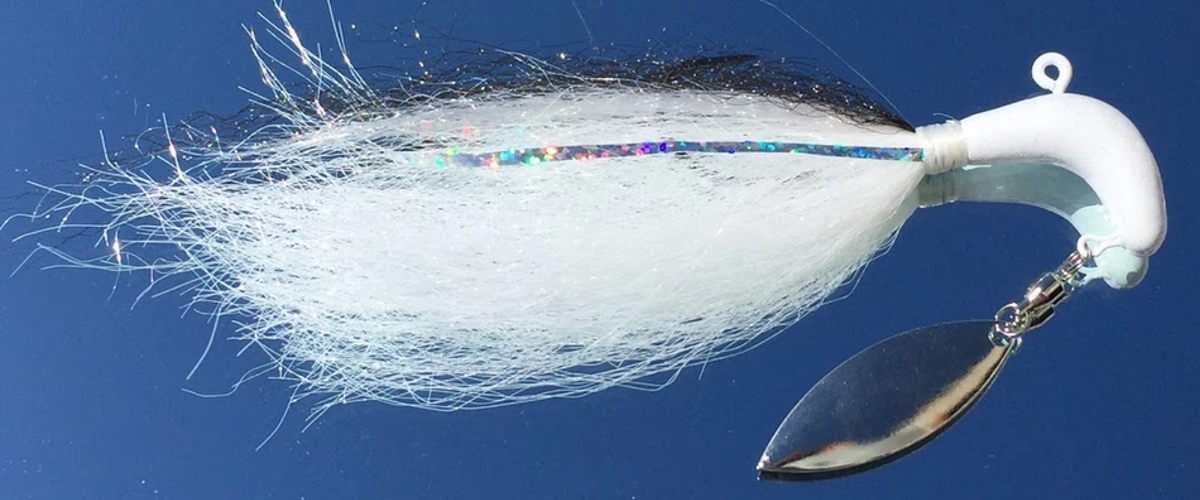
Horse Head Underspin Bucktail Jigs
This is one of those “in-between” lures that shines when fish won’t fully commit to swimbaits or slabs. It gives you flash, profile, and subtle action all in one presentation.
Why it works
The combination of bucktail and a spinning blade mimics a single injured shad with just enough flash to get noticed. On Lake Texoma, that’s a deadly trigger when stripers are suspended or loosely feeding.
Weights to use
• 1/4 oz – shallow water or slow fall
• 1/2 oz – general purpose, most common
• 3/4 oz – mid-depth control in wind
• 1 oz – deeper fish or faster presentations
Trailer setup
Most anglers add a curl tail worm or soft plastic trailer to increase movement. This adds vibration and keeps the bait in the strike zone longer.
Best colors
• Yellow chartreuse
• Pearl
• Glow white
• Green chartreuse
How to fish it
• Cast and slow roll through suspended fish
• Count it down to match depth
• Maintain a steady retrieve so the blade stays spinning
• Slight rod twitches can trigger strikes
When it shines
• Fish are suspended but not aggressive
• Light wind conditions
• Clear to moderately stained water
• When swimbaits feel too bulky
Common mistake
Fishing it too fast. This bait works because of subtlety—keep it controlled and in the zone.
Real-world use
If guides see fish on electronics that won’t chase hard, this is a go-to adjustment before switching tactics completely. It often picks off fish that ignore bigger, louder presentations.
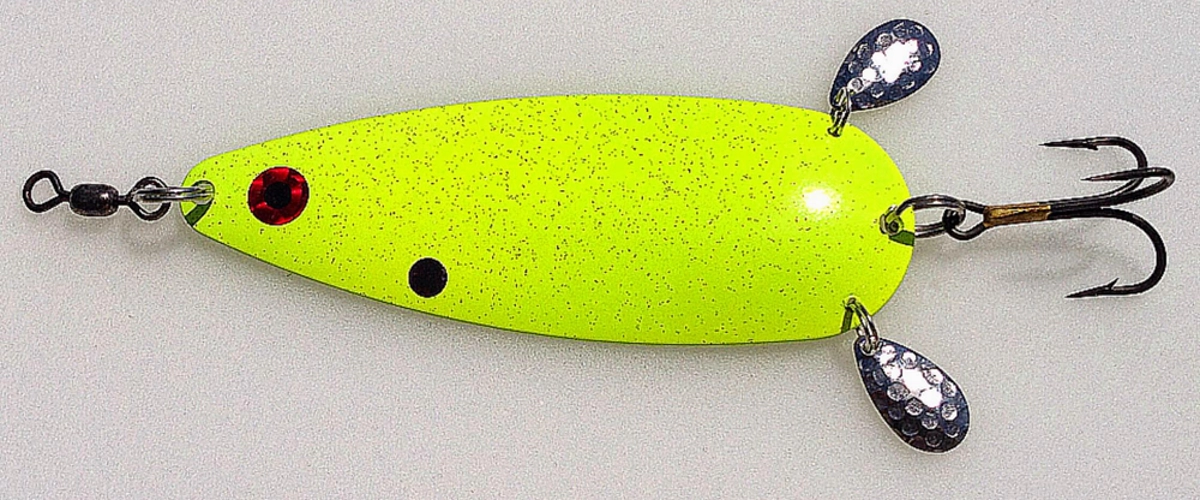
Flutter Spoons for Lake Texoma Stripers
Flutter spoons are a big-fish bait. When stripers are keyed in on larger shad, this is one of the best ways to match that profile and trigger aggressive strikes.
Why they work
Flutter spoons create a wide, erratic falling action that mimics a dying baitfish. That slow flutter on the drop is what triggers most strikes—especially from suspended or feeding fish.
Sizes to use
• 5″ – smaller profile when fish are selective
• 6.5″ – most versatile size
• 8″ – targets larger stripers and aggressive feeders
Weights
• 1 oz – shallower water or slower fall
• 2 oz – standard, all-around use
• 3 oz – deeper fish or faster drop in wind/current
Best colors
• Chartreuse
• Gold
• Silver
How to fish them
• Vertical jigging like a slab spoon
• Cast and bounce back to the boat or bank
• Let it fall on slack line to maximize flutter
• Rip it through schools of stripers chasing bait
Key detail
Most bites happen on the fall—watch your line closely. If it jumps or stops early, set the hook.
When they shine
• Fish are feeding on larger bait
• Deep water schools
• Summer and winter patterns
• When you want to target bigger fish
Common mistake
Not letting the spoon fully work on the fall. If you keep it too tight, you kill the flutter—and the bite.
Real-world use
When guides mark larger fish under bait balls or see aggressive schooling activity, flutter spoons are a go-to for pulling bigger stripers out of the group.
Exact setups that work on Texoma
Rod:
• 7′ medium-heavy spinning or casting rod
Reel:
• 3000–4000 size spinning reel
• Smooth drag is critical
Line:
• 10–20 lb braid
• 12–17 lb fluorocarbon leader
Why this matters:
Artificial fishing is about control—depth, speed, and feel. Your setup directly impacts success.
Retrieval techniques that separate average anglers from good ones
Most anglers don’t fail because of lure choice—they fail because of presentation.
Key adjustments:
• Match retrieve speed to fish activity
• Stay in the strike zone (depth control is everything)
• Change cadence before changing lures
Example:
If fish are suspended at 18 feet and you’re reeling at 10 feet, you’re wasting time—even with the right lure.
Common mistakes anglers make
• Fishing too shallow when fish are deep
• Not adjusting jig head weight to conditions
• Retrieving too fast (or too slow) without feedback
• Changing lures instead of changing presentation
• Ignoring electronics
Biggest one:
Not fishing where the fish actually are. Lures don’t fix bad location.
When artificial lures outperform live bait
Artificial lures shine when:
• Fish are actively chasing bait
• You’re covering large areas
• Schooling activity is present
• You need reaction strikes
Live bait still has its place—but artificials give you control and efficiency.
Real-world scenario on Lake Texoma
Typical guide pattern:
• Graph fish in 15–25 feet
• Drop swimbaits first
• Switch to slabs if fish stack tighter
• Throw Alabama rigs if fish spread out
• Watch for surface activity and shift to topwater
This is how experienced guides stay on fish all day—not guessing, just adjusting.
FAQ about artificial lures for Lake Texoma stripers
What is the best artificial lure for Lake Texoma stripers?
Soft plastic paddle tail swimbaits in the 4″ range are the most consistent producer across seasons.
What size jig head should I use?
3/4 oz is the standard starting point, but adjust based on depth and wind.
When should I use slab spoons?
When fish are deep, stacked, or directly under the boat—especially in summer.
Do Alabama rigs really work?
Yes, especially in cooler months when fish are feeding on groups of shad.
Are artificial lures better than live bait?
They can be, especially when fish are active or when you need to cover water quickly.
What color lures work best?
Chartreuse, pearl, glow, and silver patterns consistently produce.
Do I need electronics to fish artificials?
You don’t need them, but they dramatically increase success by helping you stay on fish.
Fish with guides who use these techniques daily
Understanding lures is one thing. Knowing when and how to use them on Lake Texoma—that’s where guides make the difference.
The guides featured on Best Lake Texoma Fishing Guides use these exact techniques daily to stay on fish in changing conditions.
Call 503-979-8253 to connect with a guide who fishes artificials the right way.
Author
Mike Oser
Fishing Guide Consultant | Lake Texoma Specialist
Founder | Best Lake Texoma Fishing Guides
Last Updated: April 2026
Phone: 503-979-8253
Service Areas
Dallas, TX
Fort Worth, TX
Sherman, TX
Denison, TX
Denton, TX
Oklahoma City, OK
Kingston, OK
Pottsboro, TX