
Quick Answer | Fishing Techniques
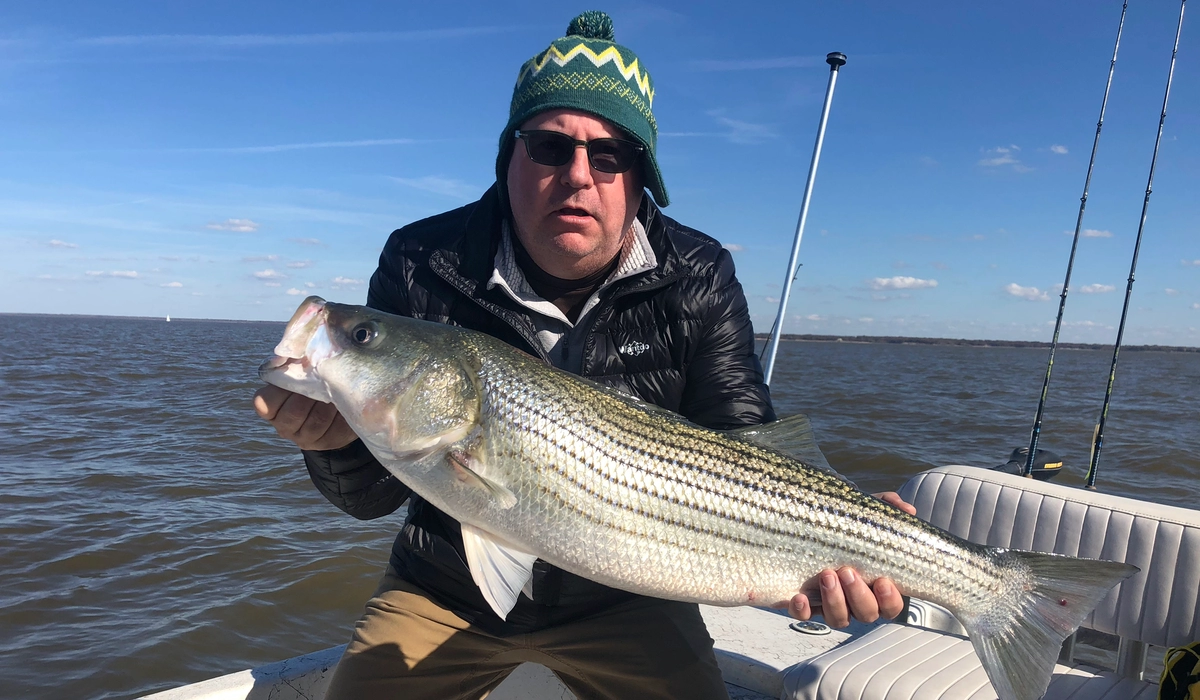
The best striper fishing techniques on Lake Texoma change throughout the year based on water temperature, baitfish movement, weather conditions, and fish location. Live bait fishing consistently catches the highest numbers of striped bass, while deadsticking, swimbaits, slab spoons, topwater lures, Alabama rigs, and trolling each shine during specific seasonal patterns. Successful Lake Texoma guides adjust techniques daily based on electronics, bird activity, wind direction, and where baitfish are holding.
Why Lake Texoma Produces So Many Striped Bass
Lake Texoma is widely considered one of the premier striped bass fisheries in the United States. Unlike many reservoirs that require constant stocking to maintain a fishery, Lake Texoma supports a naturally reproducing striped bass population.
The combination of the Red River, Washita River, abundant threadfin shad, gizzard shad, and vast open-water habitat creates ideal conditions for stripers to thrive.
Located along the Texas-Oklahoma border, Lake Texoma covers approximately 89,000 acres and offers anglers year-round opportunities to catch striped bass ranging from school-sized fish to trophy-class stripers exceeding 20 pounds.
What makes Texoma unique is the variety of techniques that can be effective on any given day. One morning may begin with explosive topwater action before transitioning to live bait fishing over deep structure. During the summer, guides may spend hours vertical jigging slab spoons over suspended schools. In winter, deadsticking often dominates.
Learning when and where to use each technique is the key to consistent success.
Understanding How Stripers Feed Throughout The Year
Before discussing individual techniques, it helps to understand how striped bass behave throughout the seasons.
Stripers are nomadic predators that follow baitfish. Their movements are rarely random.
Professional guides constantly track:
- Water temperature
- Threadfin shad location
- Wind direction
- Current generation
- Bird activity
- Seasonal migrations
- Thermocline depth
- Sonar readings
Finding bait is usually the first step toward finding fish.
In spring, stripers push toward river systems and creek channels.
Summer often concentrates fish in deeper water near structure and schools of shad.
Fall triggers aggressive feeding as fish prepare for winter.
Winter can create some of the year’s best trophy opportunities as larger stripers target slow-moving forage.
Understanding these seasonal transitions helps anglers select the most productive presentation.
Deadsticking for Lake Texoma Stripers
Deadsticking has become one of the most productive winter striper fishing techniques on Lake Texoma.
Many visiting anglers assume stripers always want a fast-moving bait. Winter often proves otherwise.
When water temperatures drop into the 40s and low 50s, striped bass frequently become less willing to chase bait over long distances. Instead, they prefer easy meals that require minimal energy.
Deadsticking takes advantage of that behavior.
What Is Deadsticking?
Deadsticking involves suspending a soft plastic lure beneath the boat and allowing it to remain almost motionless.
Rather than aggressively jigging or retrieving the bait, anglers simply hold the rod and allow the lure to hover naturally.
The technique appears simple, but it can be incredibly effective.
Best Time for Deadsticking
Deadsticking typically shines from:
- December
- January
- February
- Early March
The technique becomes especially productive during stable winter weather patterns.
Cold fronts can slow fishing dramatically, but deadsticking often continues producing when other methods struggle.
Best Deadstick Lures
Most guides favor:
- Fluke-style soft plastics
- Jerk shad baits
- Paddle tails with minimal action
- Soft plastic shad imitators
Natural colors generally perform best:
- White
- Pearl
- Smoke
- Silver
- Ice
The goal is to imitate a dying threadfin shad.
Boat Positioning
Boat positioning is critical.
Guides use electronics to locate schools of suspended fish and bait.
Rather than drifting through the school, they position directly above fish and keep presentations in the strike zone.
Modern GPS anchoring systems have dramatically improved deadsticking success.
Guide Tip
One of the biggest mistakes anglers make is moving the lure too much.
Most strikes occur while the bait remains completely still.
Patience catches fish.
Live Bait Fishing for Stripers
If the goal is simply catching the most striped bass possible throughout the year, live bait fishing remains king on Lake Texoma.
Nearly every professional guide keeps live threadfin shad available because it consistently produces results.
Why Live Bait Works
Stripers feed heavily on threadfin shad.
Presenting the exact forage they naturally consume removes much of the guesswork.
Even during difficult conditions, live bait often generates strikes when artificial lures fail.
Threadfin Shad
Threadfin shad represent the primary forage species on Lake Texoma.
Guides typically catch bait early each morning using cast nets.
Fresh bait dramatically outperforms stressed or dying baitfish.
Healthy threadfin shad create natural vibration and movement that attracts predators.
Drift Fishing
Drift fishing remains one of the most common live bait techniques.
Guides allow wind and boat control systems to move the boat naturally across productive areas.
This presentation covers water efficiently while keeping baits near suspended fish.
Down-Lining
Down-lining involves presenting live bait directly beneath the boat.
This technique excels when fish are holding at precise depths.
Using sonar, guides position baits exactly where fish appear on electronics.
Free-Lining
Free-lining allows baitfish to swim naturally with minimal weight.
This presentation works exceptionally well during shallow feeding periods.
Many summer mornings produce excellent free-line opportunities around active schools.
Electronics and Live Bait
Modern electronics have transformed live bait fishing.
Professional guides constantly monitor:
- Side imaging
- Forward-facing sonar
- Traditional sonar
- GPS mapping
Electronics help identify:
- Bait schools
- Fish depth
- Structure
- Feeding activity
Successful guides spend as much time studying electronics as they do fishing.
Seasonal Effectiveness
Live bait produces fish every month of the year.
However, it is particularly effective during:
- Summer heat
- Post-front conditions
- High-pressure systems
- Tough bite periods
When artificial presentations become inconsistent, live bait often saves the day.
Jigging Slabs for Summer Stripers
When Lake Texoma water temperatures climb during summer, slab spoon fishing becomes one of the most productive artificial techniques available.
Many guides rely on slabs daily from June through September.
Why Summer Fish School Deep
Summer creates unique challenges.
As surface temperatures rise, stripers frequently move deeper.
They often suspend around:
- River channels
- Humps
- Ledges
- Bait concentrations
These fish may hold 20 to 50 feet deep.
Slab spoons allow anglers to reach them quickly.
What Is a Slab Spoon?
A slab spoon is a heavy metal lure designed for vertical presentations.
The lure falls rapidly and creates a fluttering action that mimics injured baitfish.
This presentation often triggers reaction strikes from aggressive stripers.
Finding Summer Schools
The biggest key to slab fishing is locating active schools.
Guides search for:
- Dense sonar returns
- Suspended baitfish
- Bird activity
- Structure transitions
When fish are located, anglers drop slabs directly into the school.
Presentation Techniques
Several retrieves work well:
- Sharp upward snaps
- Controlled lifts
- Short hops
- Lift-and-fall presentations
Fish often strike as the lure falls.
Watching line movement becomes critical.
Reading Sonar
Professional guides constantly monitor fish reactions.
It is common to watch stripers rise toward a slab on sonar.
This immediate feedback helps anglers adjust cadence and lure depth.
Guide Tip
If fish follow but do not commit, speed changes often trigger strikes.
A faster fall or quicker snap can create the reaction bite needed to convert followers into hookups.
Flutter Spoons for Lake Texoma Stripers
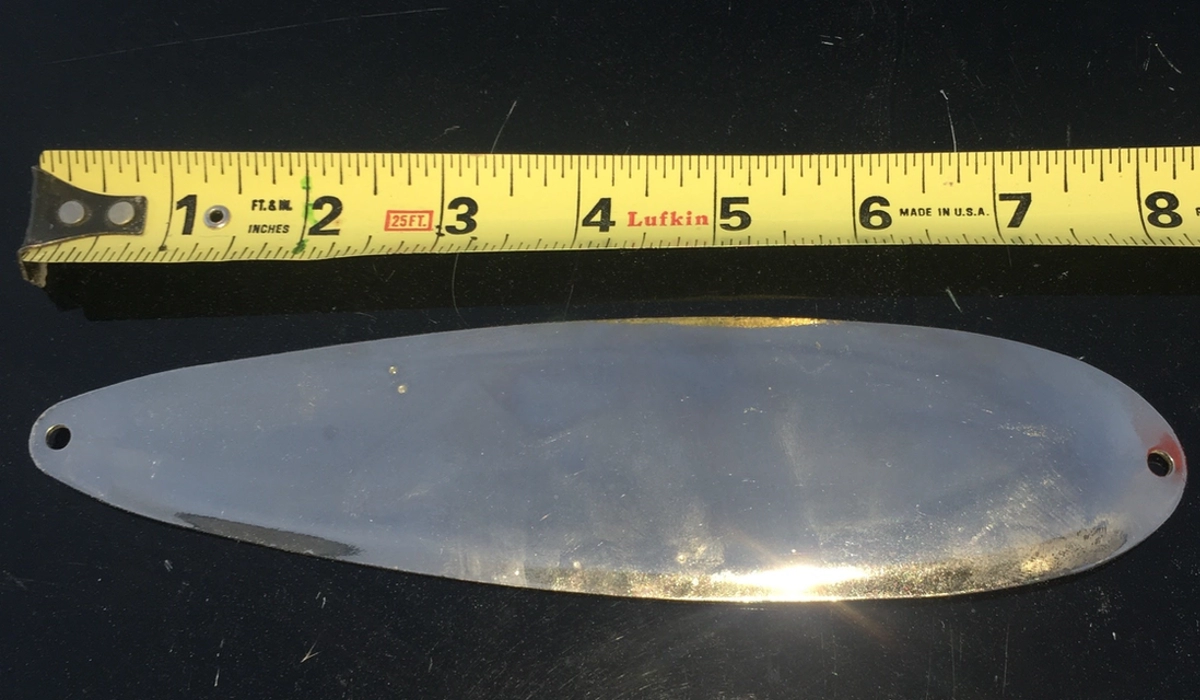
Flutter spoons have become one of the most effective artificial lures for targeting larger striped bass on Lake Texoma. While slab spoons dominate conversations about vertical fishing, flutter spoons offer a completely different presentation that often triggers strikes from fish that refuse faster-moving baits.
The key difference is the fall. A flutter spoon wobbles, flashes, and glides as it sinks, closely resembling an injured shad struggling through the water column.
When Flutter Spoons Work Best
Flutter spoons excel during:
- Summer offshore fishing
- Winter suspended fish patterns
- Post-frontal conditions
- Deep bait schools
- Clear water conditions
Many guides turn to flutter spoons when fish appear on electronics but refuse slab spoons or swimbaits.
Presentation Techniques
The most productive retrieve is surprisingly simple.
Drop the spoon below the fish, lift the rod slowly, then allow the lure to flutter back down naturally. The lure’s falling action creates most of the strikes.
Because the lure sinks on semi-slack line, anglers must pay close attention for subtle line movement.
Why Bigger Fish Love Flutter Spoons
Large stripers are energy-efficient predators. A flutter spoon imitates an easy meal and often appeals to mature fish that aren’t willing to chase aggressive presentations.
Many trophy-class Texoma stripers are caught every year on oversized flutter spoons fished around deep bait schools.
Tail Spinners for Lake Texoma Stripers
Tail spinners are one of the most overlooked striped bass lures on Lake Texoma.
These compact metal baits combine flash, vibration, and a realistic baitfish profile into one highly effective package. Their ability to fish multiple depths makes them valuable throughout the year.
Why Tail Spinners Work
The rear blade produces:
- Flash
- Vibration
- Noise
- Wounded baitfish appearance
These characteristics attract striped bass even when they are not actively feeding.
Tail spinners frequently trigger reaction strikes from fish suspended around bait schools.
Best Situations for Tail Spinners
Professional guides often reach for tail spinners when:
- Fish are feeding on small threadfin shad
- Wind makes swimbait fishing difficult
- Schooling fish surface briefly
- Fish are suspended over deep water
- Birds indicate scattered feeding activity
Effective Retrieves
Several retrieves consistently produce:
- Slow steady retrieve
- Lift-and-fall retrieve
- Vertical jigging
- Count-down presentation
Many anglers fish tail spinners too fast. A moderate retrieve often generates more bites because the lure remains in the strike zone longer.
Fishing Swimbaits for Lake Texoma Stripers
Few artificial lures have changed striper fishing more than modern swimbaits.
Today, many Lake Texoma guides rely heavily on swimbaits because they imitate threadfin shad almost perfectly and allow anglers to cover water efficiently.
Swimbaits catch fish during every season of the year.
Why Swimbaits Are So Effective
Stripers feed primarily on shad.
A paddletail swimbait closely matches the size, shape, and swimming action of the forage fish they consume daily.
This realism creates confidence and consistent results.
Best Swimbait Styles
Popular choices include:
- Paddle tail swimbaits
- Soft jerk shads
- Hollow body swimbaits
- Split-tail swimbaits
Natural colors typically perform best:
- White
- Pearl
- Chartreuse white
- Sexy shad
- Silver
Underspin Jig Heads
Underspins deserve special attention.
An underspin combines a swimbait with a spinning blade mounted beneath the jig head.
The blade creates flash that mimics fleeing baitfish and often triggers strikes from stripers that ignore standard swimbaits.
Many guides consider underspins one of the most productive artificial lure combinations on Lake Texoma.
Seasonal Applications
Swimbaits perform well:
Spring
Fish moving toward spawning areas.
Summer
Suspended fish over structure.
Fall
Aggressive feeding schools.
Winter
Slow-rolled presentations around bait concentrations.
Guide Tip
Match swimbait size to the threadfin shad currently being eaten by stripers.
Small adjustments in lure size often make a huge difference.
Topwater Fishing for Lake Texoma Stripers
Topwater fishing creates some of the most exciting striped bass action available anywhere.
Few experiences compare to watching a 10-pound striper explode on a surface lure at sunrise.
For many anglers, topwater fishing represents the ultimate Lake Texoma experience.
When Topwater Fishing Peaks
Topwater action is best during:
- Late spring
- Summer
- Early fall
Early mornings are typically most productive.
Cloud cover and wind can extend surface activity throughout the day.
Schooling Fish
Schooling stripers often push baitfish to the surface.
When this occurs, anglers may witness acres of feeding activity.
These opportunities can produce dozens of fish in a short period.
Best Topwater Lures
Popular choices include:
- Pencil poppers
- Walking baits
- Zara Spooks
- Large topwater plugs
- Surface wake baits
Reading Bird Activity
Birds play a major role in locating feeding fish.
Gulls and terns often reveal schools before fish become visible on the surface.
Professional guides constantly monitor bird activity throughout the day.
Guide Tip
When fish surface briefly, make long casts beyond the activity and retrieve through the feeding zone.
This approach frequently produces more strikes than casting directly into the school.
Alabama Rigs for Lake Texoma Stripers
The Alabama Rig revolutionized striped bass fishing by allowing anglers to present multiple baitfish simultaneously.
Its ability to imitate a small school of shad makes it incredibly effective on Lake Texoma.
Why Alabama Rigs Work
Stripers naturally attack groups of baitfish.
An Alabama Rig creates the appearance of a small pod of shad moving through the water.
This profile often triggers aggressive feeding responses.
Casting vs Trolling
Guides use Alabama Rigs in two primary ways:
Casting
Effective around active schools and visible fish.
Trolling
Excellent for covering large sections of open water.
Both approaches produce fish when matched to conditions.
Seasonal Effectiveness
Alabama Rigs shine during:
- Fall feeding periods
- Winter bait concentrations
- Spring migrations
They can produce year-round but are especially effective when fish target larger baitfish schools.
Guide Tip
Pay attention to local regulations regarding the number of hooks allowed.
Rig configurations may vary depending on where you fish.
Trolling for Lake Texoma Stripers
Trolling remains one of the most effective techniques for locating scattered striped bass.
When fish are spread across large areas of open water, trolling can outperform nearly every other method.
Why Trolling Works
Rather than waiting for fish to come to the lure, trolling actively searches for fish.
This approach allows anglers to cover miles of productive water efficiently.
Popular Trolling Lures
Guides commonly use:
- Umbrella rigs
- Alabama rigs
- Deep-diving crankbaits
- Swimbaits
- Bucktail combinations
Finding Scattered Fish
Trolling becomes especially valuable during:
- Summer
- Post-frontal periods
- Transitional seasons
- Windy conditions
When schools are difficult to locate, trolling often finds fish faster than stationary techniques.
Electronics and Trolling
Modern electronics help guides identify productive depths and bait concentrations.
Successful trolling is rarely random.
The best guides continuously adjust speed, depth, and location based on sonar information.
How Professional Guides Choose the Right Technique
The biggest difference between experienced guides and average anglers is not lure selection.
It is decision-making.
Professional guides constantly evaluate environmental conditions and adjust accordingly.
Water Temperature
Water temperature drives much of striper behavior.
- Winter: Deadsticking, live bait
- Spring: Swimbaits, live bait
- Summer: Slabs, flutter spoons, live bait
- Fall: Topwater, Alabama rigs, swimbaits
Bait Location
Find bait and you usually find fish.
Threadfin shad determine where stripers spend much of their time.
Bird Activity
Birds often provide the fastest clues.
Diving gulls can reveal active feeding fish from hundreds of yards away.
Wind Direction
Wind pushes plankton.
Plankton attracts baitfish.
Baitfish attract stripers.
Many productive Texoma patterns begin with wind.
Electronics
Modern sonar technology has transformed striper fishing.
Today’s guides use electronics to locate:
- Fish
- Bait
- Structure
- Depth changes
- Feeding activity
Fish Depth
Knowing fish depth determines presentation.
A lure six feet above the fish may never get a bite.
A lure placed directly in the strike zone can produce instantly.
Which Striper Fishing Technique Catches the Most Fish?
If one technique consistently catches the most striped bass on Lake Texoma throughout the year, it is live bait fishing with threadfin shad.
Live bait works during every season and remains effective under a wide range of conditions.
However, no single technique dominates every day.
Winter often favors deadsticking.
Summer frequently rewards slab spoons and flutter spoons.
Fall can produce incredible topwater action.
Swimbaits excel during transitional periods.
Trolling helps locate scattered fish.
The best Lake Texoma guides succeed because they understand when to switch techniques based on conditions rather than forcing a single approach.
The anglers who consistently catch the most stripers are the ones willing to adapt.
Seasonal Striper Fishing Techniques on Lake Texoma
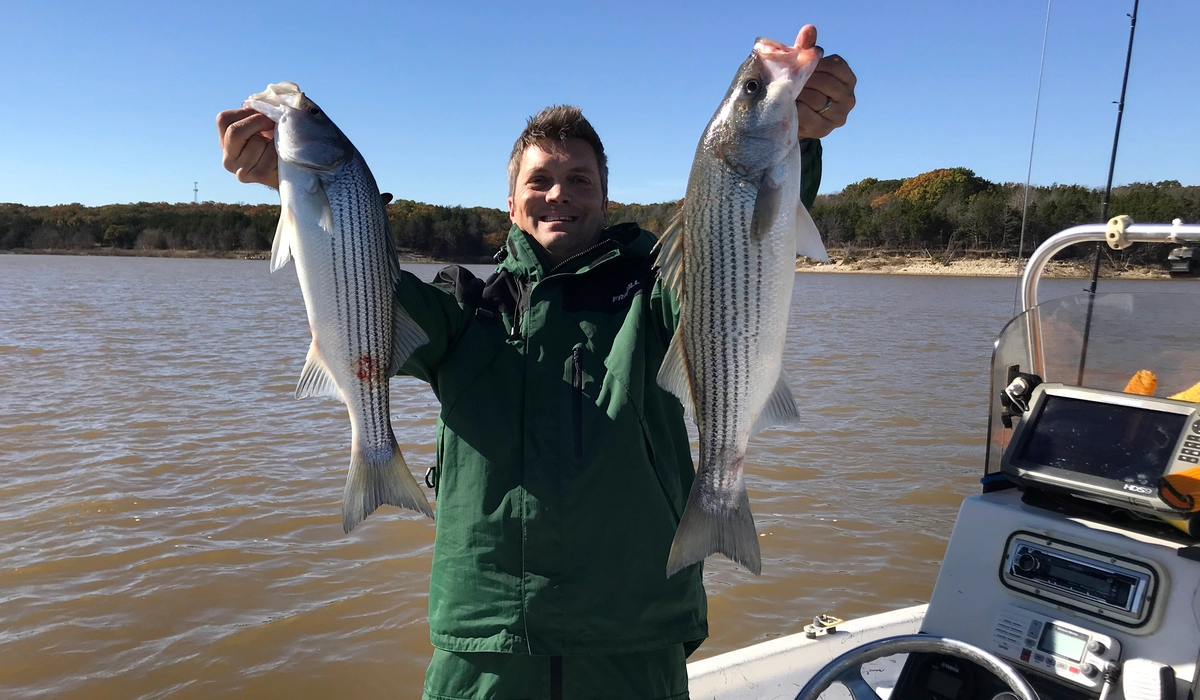
Understanding seasonal patterns is one of the biggest differences between anglers who occasionally catch stripers and those who consistently fill the cooler. While striped bass remain active year-round on Lake Texoma, their location, feeding behavior, and preferred presentations change dramatically throughout the seasons.
Professional guides rarely fish the same way in January that they do in July.
Successful anglers adapt.
Spring Striper Fishing Techniques
Spring is one of the most exciting times to fish Lake Texoma.
As water temperatures begin warming from winter lows, striped bass become increasingly active and start moving toward river systems and spawning areas.
Although not every fish participates in the spawning run, many migrate toward the Red River and Washita River systems.
During spring, guides commonly rely on:
- Live bait fishing
- Swimbaits
- Alabama rigs
- Topwater lures
- Umbrella rigs
Fish often hold around:
- Creek channels
- Main lake points
- River mouths
- Flats near spawning areas
Swimbaits become particularly effective because stripers aggressively chase baitfish during warming trends.
Many anglers also experience outstanding topwater opportunities during stable weather periods.
Spring weather can change quickly, however.
A cold front may push fish deeper and require a return to live bait presentations.
Summer Striper Fishing Techniques
Summer creates some of the most predictable patterns of the year.
As surface temperatures climb, baitfish and stripers often move offshore toward deeper structure and cooler water.
This is when electronics become critical.
Successful guides spend much of their day watching sonar and locating:
- Suspended fish
- Deep bait schools
- River channel edges
- Humps and ledges
The best summer techniques include:
- Slab spoons
- Flutter spoons
- Live bait
- Down-lining
- Tail spinners
- Deep swimbaits
Many fish spend their day between 20 and 50 feet deep.
Vertical presentations dominate because they allow anglers to keep lures in the strike zone longer.
Summer is also one of the most productive seasons for live bait fishing.
When fish become less aggressive during hot weather, threadfin shad frequently outproduce artificial lures.
Fall Striper Fishing Techniques
Many experienced Texoma anglers consider fall the best overall season for striped bass fishing.
Cooling water temperatures trigger aggressive feeding behavior.
Stripers know winter is coming and begin feeding heavily.
Fall commonly produces:
- Surface schooling fish
- Topwater action
- Aggressive swimbait bites
- Alabama rig success
- Live bait opportunities
Bird activity becomes increasingly important.
Gulls often reveal feeding fish from long distances.
Fall fishing can be spectacular because fish frequently move shallow and chase bait aggressively.
Large schools may erupt on the surface with little warning.
When this happens, topwater plugs and swimbaits often produce immediate action.
Winter Striper Fishing Techniques
Winter is trophy season on Lake Texoma.
Although many anglers assume cold weather slows fishing, experienced guides know winter can produce some of the biggest fish of the year.
Stripers become more energy conscious during colder months.
Rather than chasing bait long distances, they often prefer easy meals.
The best winter techniques include:
- Deadsticking
- Live bait fishing
- Flutter spoons
- Slow-rolled swimbaits
Deadsticking shines when water temperatures drop into the 40s and low 50s.
This subtle presentation frequently fools larger fish that ignore faster-moving lures.
Winter also produces excellent opportunities for anglers willing to fish slowly and let electronics guide their decisions.
The Seasonal Advantage
The most successful Lake Texoma guides understand that fish behavior changes constantly.
Rather than forcing a favorite lure or technique, they adapt to:
- Water temperature
- Fish location
- Baitfish movement
- Weather patterns
- Seasonal transitions
That flexibility consistently puts more fish in the boat.
Common Striper Fishing Mistakes That Cost Anglers Fish
Even with the right equipment and productive water, many anglers unknowingly make mistakes that dramatically reduce their success.
Professional guides see the same problems repeatedly.
Avoiding these common mistakes can immediately improve catch rates.
Fishing Above the Fish
One of the most common mistakes in striper fishing is presenting lures too high in the water column.
A basic rule many guides follow is:
“If fish are marked at 30 feet, your lure should be at 30 feet.”
Stripers generally feed upward, but only within reason.
A bait passing several feet above the school may never be noticed.
Electronics help eliminate guesswork.
Ignoring Electronics
Modern sonar is one of the most valuable tools available to anglers.
Many fishermen spend thousands of dollars on electronics but fail to use them effectively.
Successful guides constantly monitor:
- Fish depth
- Bait location
- Structure
- Water depth
- Fish movement
Electronics often reveal whether fish are active, suspended, feeding, or inactive.
Understanding that information dramatically increases efficiency.
Fishing Too Fast
Many anglers retrieve lures faster than conditions require.
While aggressive retrieves sometimes trigger reaction strikes, colder water often demands a slower presentation.
This is especially true during:
- Winter
- Post-frontal conditions
- High-pressure weather systems
Deadsticking and slow-rolled swimbaits consistently prove that slower can be better.
Not Matching Bait Size
Stripers frequently focus on a specific size of threadfin shad.
Using oversized lures when fish are feeding on small bait can reduce success.
Guides constantly compare:
- Baitfish size
- Lure profile
- Forage availability
Matching the hatch remains one of the most effective strategies in fishing.
Poor Boat Positioning
Boat control is often overlooked.
Many anglers focus entirely on lure selection while ignoring positioning.
Professional guides pay close attention to:
- Wind direction
- Current
- Fish movement
- Structure
- Sonar readings
Proper boat positioning keeps presentations in the strike zone longer.
That alone often determines success or failure.
Leaving Fish Too Soon
Some anglers abandon productive areas after only a few minutes.
Stripers often move throughout the day.
A location that appears inactive at 8:00 AM may come alive at 8:30.
Experienced guides trust their electronics and understand that patience frequently pays off.
Chasing Yesterday’s Pattern
Perhaps the biggest mistake of all is assuming yesterday’s pattern will work today.
Lake Texoma changes constantly.
Wind shifts.
Weather changes.
Bait moves.
Fish relocate.
The best guides approach each day with an open mind and let current conditions dictate their strategy.
The Difference Between Good and Great Anglers
The anglers who consistently catch more stripers are rarely using secret lures.
More often, they:
- Adapt faster
- Trust electronics
- Position boats correctly
- Match baitfish size
- Fish at the proper depth
- Change techniques when necessary
Mastering these fundamentals will usually produce better results than buying another lure.
When combined with the techniques covered throughout this guide, these adjustments can dramatically increase success on Lake Texoma and help anglers catch more striped bass throughout the year.
Frequently Asked Questions About Striper Fishing Techniques
What is the best striper fishing technique on Lake Texoma?
Live bait fishing with threadfin shad consistently catches the most striped bass throughout the year on Lake Texoma. However, the best technique changes with the season, water temperature, bait location, and fish behavior. Professional guides regularly switch between live bait, deadsticking, slab spoons, swimbaits, topwater lures, Alabama rigs, flutter spoons, tail spinners, and trolling to stay on active fish.
When is deadsticking most effective for Lake Texoma stripers?
Deadsticking is typically most productive from December through early March when water temperatures are cold and stripers become less willing to chase fast-moving lures. Suspending a soft plastic bait beneath the boat often triggers strikes from larger winter fish looking for an easy meal.
Are swimbaits better than live bait for striped bass?
Swimbaits are one of the best artificial lure options for Lake Texoma stripers, but live bait generally produces more fish over the course of a season. Swimbaits excel when fish are actively feeding and allow anglers to cover water quickly while matching the appearance of threadfin shad.
What depth do stripers usually hold during summer?
Summer stripers commonly suspend between 20 and 50 feet deep depending on water temperature, oxygen levels, and baitfish location. Electronics are critical during summer because fish can move throughout the water column during the day.
Do topwater lures work on Lake Texoma?
Yes. Topwater fishing can be outstanding from late spring through early fall. Early mornings often provide the best action as stripers push baitfish to the surface. Pencil poppers, walking baits, and other surface lures can produce explosive strikes during active feeding periods.
What electronics do professional striper guides use?
Most Lake Texoma guides rely on GPS mapping, side imaging, down imaging, traditional sonar, and forward-facing sonar technology. These tools help locate baitfish, identify structure, monitor fish depth, and observe fish behavior in real time.
What is the easiest technique for beginners?
Live bait fishing is usually the easiest and most productive technique for beginners. It requires less lure presentation skill and consistently catches fish throughout the year. Many first-time Lake Texoma anglers experience success using live threadfin shad under the guidance of an experienced captain.
Why Lake Texoma Continues To Be America’s Premier Striper Fishery
Few fisheries offer the combination of numbers, size, and year-round opportunity found on Lake Texoma.
On any given day, anglers may catch fish using live bait, swimbaits, slab spoons, flutter spoons, tail spinners, topwater lures, Alabama rigs, trolling presentations, or winter deadsticking techniques.
That diversity is what makes Texoma special.
The most successful anglers aren’t committed to a single lure or presentation. They understand how striped bass behavior changes throughout the year and adjust their approach accordingly.
Whether you’re targeting your first striped bass or chasing a trophy fish, learning multiple striper fishing techniques will make you a more versatile and successful angler.
Master the seasonal patterns, trust your electronics, pay attention to baitfish, and stay adaptable. That’s the same formula successful Lake Texoma guides use every day.
Learn More About Lake Texoma Striper Fishing
The techniques covered on this page are only part of the equation. Understanding seasonal patterns, bait movement, weather conditions, and fish behavior can dramatically improve success on the water.
Additional resources that may help include:
- Best Time to Fish Lake Texoma
- Winter Striper Fishing Lake Texoma
- Spring Striper Fishing Lake Texoma
- Summer Striper Fishing Lake Texoma
- Fall Striper Fishing Lake Texoma
- Best Swimbaits for Lake Texoma Stripers
- Best Topwater Lures for Lake Texoma Stripers
- Live Bait Fishing for Lake Texoma Stripers
- Deadsticking for Lake Texoma Stripers
- Lake Texoma Fishing FAQ
Lake Conditions That Can Make or Break Your Fishing Trip
For current lake levels, boat ramp information, reservoir conditions, and operational updates, visit the U.S. Army Corps of Engineers Lake Texoma resource center. Staying informed about water conditions can help anglers make better decisions before every fishing trip.