
Best Bait for Lake Texoma Stripers Introduction
Author: Mike Oser
Founder | Best Lake Texoma Fishing Guides
Fishing Guide Consultant | Lake Texoma Specialist
Last Updated: April 23, 2026
Phone: 503-979-8253
Quick Answer
The best bait for Lake Texoma stripers is live shad—threadfin and gizzard—fished on a simple egg sinker rig with small circle hooks (sizes 4 to 1/0). The key isn’t just the bait—it’s keeping it alive and active all day. Healthy bait consistently outfishes everything else on Texoma.
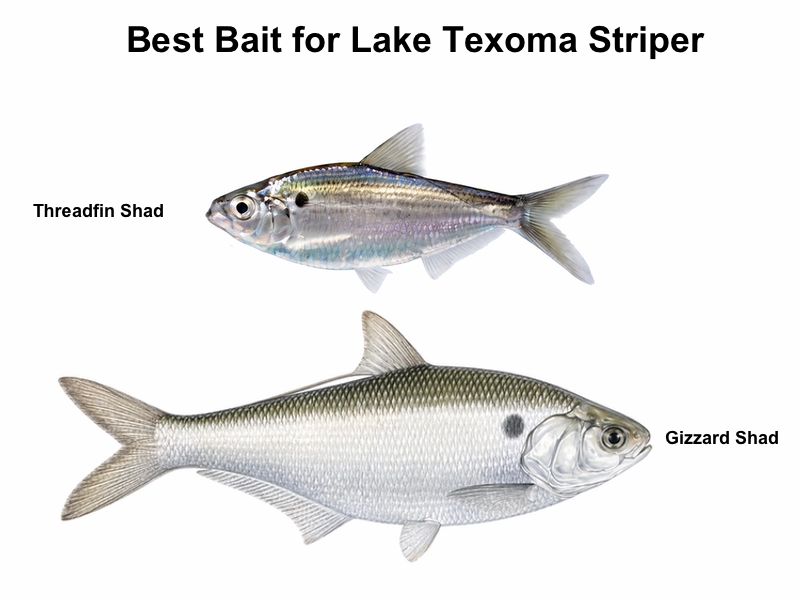
Gizzard Shad vs Threadfin Shad (What Stripers Are Actually Eating)
If you’re fishing Lake Texoma with live bait, you’re almost always using one of two forage species: gizzard shad or threadfin shad. Understanding the difference—and when each matters—is a huge advantage.
Gizzard shad are the larger profile bait.
- Typically 4″ to 8″+ long
- Thick-bodied with strong presence in the water
- Best for targeting bigger stripers
- Most effective when fish are feeding aggressively
Threadfin shad are smaller and more fragile.
- Typically 1″ to 4″ long
- Softer body with more natural movement
- Better when fish are finicky or pressured
- Often produce more bites on tough days
Both species exist in large numbers on Lake Texoma, and stripers constantly adjust to whichever is easiest to feed on.
Water Temperature, Die-Offs, and Why It Matters
Both gizzard and threadfin shad are extremely sensitive to water temperature.
When winter temperatures drop too low for extended periods, Lake Texoma can experience major shad kills. Threadfin are especially vulnerable and can start dying when water gets into the low 40s.
When this happens:
- Large numbers of baitfish die off
- Stripers key in on easy meals
- Fishing can get very good if you’re around it
Gizzard shad are more tolerant, but they’re not immune. Sudden cold snaps can still trigger die-offs.
These events reset the food chain and can concentrate fish heavily in certain areas.
Shad Spawn (One of the Biggest Feeding Events of the Year)
The shad spawn is a major deal on Lake Texoma—and across Texas and Oklahoma reservoirs.
Here’s how it actually works:
- Begins when water temps reach mid to upper 60s (around 66–70°F)
- Typically starts late April and peaks into early May in North Texas
- Gizzard shad often start slightly earlier, sometimes in April
- Threadfin shad can spawn multiple times from spring through summer
Spawning happens in shallow water on:
- Rock
- Wood
- Grass
- Riprap
- Dock edges
It usually occurs at first light, and it’s short-lived—but explosive.
When it’s happening:
- Shad are grouped tight and distracted
- Stripers (and other fish) feed heavily
- It can be some of the easiest fishing of the year
If you’ve ever seen fish blowing up on the surface early morning—that’s often tied directly to the shad spawn.
Why Texoma Produces So Much Bait
Lake Texoma consistently produces massive bait populations, and there’s a reason:
👉 Salinity in the water helps support strong shad reproduction
Texoma has slightly elevated salt content compared to most freshwater lakes, which helps create a stable environment for baitfish populations to thrive.
Combine that with:
- Fertile water (plankton production)
- River inflow
- Wind-driven nutrient movement
And you get huge schools of bait—which is exactly why Texoma holds so many stripers.
Mud Lines, Rain, and Bait Movement
Water clarity changes can stack bait fast.
After heavy rain, Texoma often forms mud lines where dirty water meets clearer water.
This is prime feeding territory.
Shad will gather along:
- Clean water edges
- Color change lines
- Wind-blown shorelines
When that happens:
- Massive bait schools form
- Stripers push bait into tight zones
- Feeding activity ramps up quickly
This is when fishing can go from slow to wide open in a hurry.
The One Rule That Always Holds
Stripers don’t roam randomly.
They follow bait.
If you find:
- Active shad
- Tight schools
- Movement
You’re in the right area.
If you don’t see bait—leave.
When to Use Gizzard vs Threadfin (Quick Decision Guide)
Choosing the right bait on Lake Texoma isn’t guesswork. It’s about matching what stripers are feeding on and how they’re behaving that day.
Use Gizzard Shad When:
- You’re targeting bigger stripers
- Fish are feeding aggressively
- You see large bait on sonar
- Water is warmer and bait is active
- You want fewer bites but bigger fish
Gizzard shad put off a bigger profile and more vibration in the water. When stripers are hunting hard, they’ll choose the bigger meal.
Use Threadfin Shad When:
- The bite is slow or inconsistent
- Fish are pressured or finicky
- You’re seeing smaller bait schools
- Water temps are cooler or unstable
- You want more bites overall
Threadfin shad move more naturally and are easier for stripers to commit to when they’re not fully feeding.
When You’re Not Sure (Best Move)
Start with both.
Good anglers—and especially guides—will:
- Put out a mix of gizzard and threadfin
- Watch which one gets hit first
- Adjust the entire spread based on that pattern
The fish will tell you what they want. Your job is to pay attention and adapt fast.
It Starts Before You Ever Fish
If you want to fish like a guide, understand this:
The work starts at 3 AM.
While most anglers are asleep, guides are throwing heavy cast nets for hours trying to fill bait tanks. That’s not optional—it’s the foundation of the entire trip.
And no—asking a Lake Texoma guide where he got his bait isn’t going to get you a real answer. That’s earned knowledge.
Where to Find Bait on Lake Texoma
Bait location changes daily, but there are consistent patterns.
Start here:
- Under marina lights early morning or at night
- Backs of coves where bait stacks up
- Wind-blown points pushing plankton and shad
- Shallow flats right at daylight
If you don’t see bait flipping or marking on electronics, don’t fish there. Stripers follow bait—always.
Live Bait Tanks Matter More Than You Think
This is where most people lose the game.
You can have perfect bait in the morning and dead bait by noon if your system isn’t right.
Key factors:
- Strong oxygen flow
- Constant water circulation
- Stable water temperature
- Clean filtration
Bait tank filters need to be cleaned during the trip. Scales and slime build up fast, and once water quality drops, your bait dies quick.
Healthy bait = aggressive movement
Aggressive movement = more bites
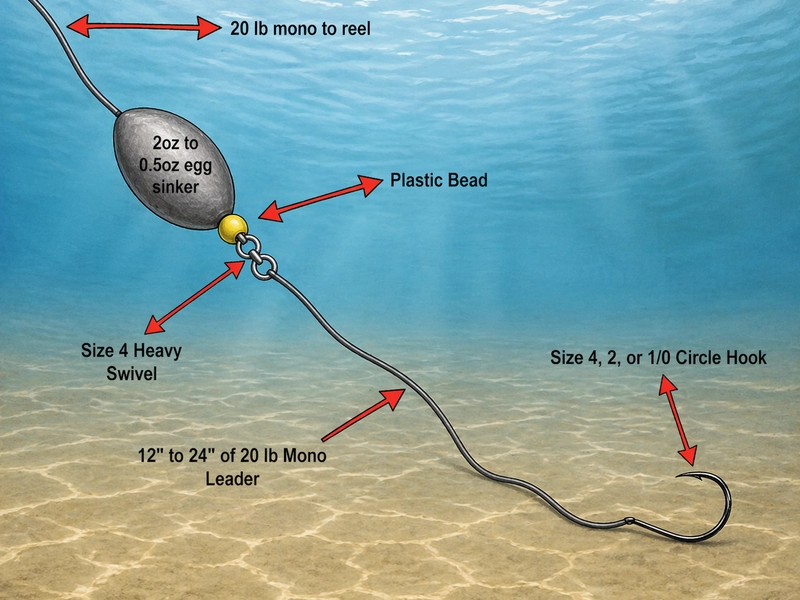
Standard Lake Texoma Live Bait Rig
This is the go-to setup used by guides every day.
Main Line
20 lb monofilament to the reel
Weight
Egg sinkers:
- 1/2 oz
- 3/4 oz
- 1 oz
- 1.5 oz
- 2 oz
Adjust weight based on wind and depth
Terminal Setup
- Plastic bead
- Size 4 heavy swivel
- 12” to 24” of 20 lb mono leader
Hook
Circle hooks:
- Size 4
- Size 2
- Size 1
- 1/0
Smaller hooks consistently outperform larger ones on Texoma.
Why Smaller Hooks Catch More Fish
Big hooks kill the natural movement of your bait.
Stripers don’t always just crush bait. They:
- Swipe at it
- Follow it
- Mouth it before committing
Smaller circle hooks let the bait swim naturally and hook fish clean in the corner of the mouth. That’s why most experienced guides stay in that size 4 to 1/0 range.
Hooking Live Bait the Right Way
Hook placement matters more than most people realize.
Best options:
- Through the nose for maximum lifespan
- Behind the dorsal fin for more action
Bad hook placement kills bait fast. If your bait isn’t lively, you’re fishing at a disadvantage immediately.
How to Adjust When the Bite Slows
Even on good days, the bite changes.
Here’s how to stay on fish:
Downsize your weight
Less resistance lets bait move naturally
Shorten your leader
Keeps bait tighter to fish when they’re not chasing
Match bait size
Sometimes smaller shad gets more bites
Check your bait tank
If your bait looks weak, fix that first
Follow the bait
If bait moves, you move. Don’t fish empty water
What Most Anglers Get Wrong
Most anglers focus on fishing time.
Guides focus on bait.
They’ll spend hours making sure they have the best possible bait—and then catch fish fast once they start.
If your bait isn’t right, nothing else matters.
Frequently Asked Questions
What is the best live bait for Lake Texoma stripers?
Threadfin and gizzard shad are the top choices. Fresh, lively bait will always outperform artificial lures in most conditions.
What size hook should I use for stripers?
Use small circle hooks from size 4 to 1/0. They improve bait presentation and increase hookup ratios.
How do you keep bait alive all day?
Use a properly aerated bait tank with clean filters and good water circulation. Clean the system during the trip to prevent bait loss.
Where is the best place to catch bait?
Look under marina lights, in coves, and along wind-blown points. Early morning is typically the best time.
What size weight should I use?
Egg sinkers from 1/2 oz to 2 oz depending on wind and depth. Adjust to maintain natural bait movement.
How long should my leader be?
A 12” to 24” mono leader works best. Adjust based on fish behavior and structure.
Top Lake Texoma Fishing Guides — Texas & Oklahoma
If you want to shortcut the learning curve, fish with a Lake Texoma guide who already knows where the bait is and how to keep it alive. It’s the fastest way to understand how this fishery really works.
About the Author
Mike Oser is the founder of Best Lake Texoma Fishing Guides. He works closely with professional striper guides to publish real-time fishing patterns, helping anglers consistently catch striped bass on Lake Texoma.
Service Areas
Dallas, TX
Fort Worth, TX
Sherman, TX
Denison, TX
Denton, TX
Oklahoma City, OK
Kingston, OK
Pottsboro, TX
Lake Texoma Striper Fishing Resources
Improve Your Striper Fishing Success
- Live Bait vs Artificial Lures for Stripers Lake Texoma
- How Guides Find Fish on Lake Texoma
- Best Electronics for Finding Stripers on Lake Texoma
More Lake Texoma Bait & Lure Guides