
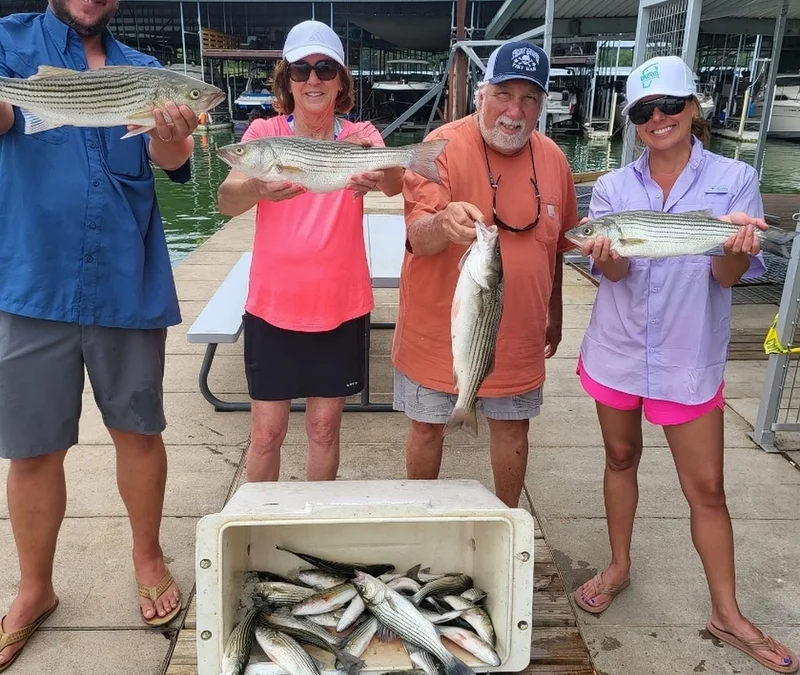
Quick Answer: When Do Stripers Spawn on Lake Texoma
Striped bass on Lake Texoma spawn from late March through early May, triggered by water temperatures between 55°F and 68°F. The peak occurs in April when fish move into the Red and Washita River arms, but the best fishing typically happens just before and after the spawn—not during it. Stripers spawn on Lake Texoma in spring, with peak activity in April when water temperatures reach the mid-60s.
| Month | Spawn Stage | Fishing Quality |
|---|---|---|
| March (Late) | Pre-Spawn | Excellent |
| April (Early) | Pre-Spawn | Excellent |
| April (Mid) | Peak Spawn | Tough |
| April (Late) | Post-Spawn Start | Improving |
| May | Post-Spawn | Very Good |
Exact Months Ranked for Lake Texoma Striper Spawn
Late March (Pre-Spawn Build)
Water temperatures begin climbing into the mid-50s, and stripers start staging toward river systems. Fish group up tightly and feed aggressively as they prepare for the spawn. This is one of the most consistent times to catch quality fish because they are actively feeding and easier to locate.
Early April (Prime Pre-Spawn Window)
This is often the best stretch of the entire spring. Water temperatures are rising steadily, but most fish have not fully committed to spawning yet. They hold near staging areas just outside river systems and are highly aggressive. Guides consistently target this window because fish are predictable and responsive.
Mid-April (Peak Spawn Window)
This is when spawning activity is at its highest. Fish move into shallow water with current in the Red and Washita River arms. Even though fish are concentrated, they are far less interested in feeding. This is where many anglers struggle despite seeing fish on electronics.
Late April (Post-Spawn Transition)
Spawning begins to taper off. Some fish remain in the river systems, but many begin transitioning back toward the main lake. Feeding activity increases, but patterns can still be inconsistent for a short period.
Early to Mid-May (Post-Spawn Recovery)
Fish regroup in the main lake and resume feeding patterns. Schools become easier to locate again, and both artificial lures and live bait produce consistent results. This is a strong second window after pre-spawn.
Water Temperature Triggers (The Real Indicator)
Water temperature—not the calendar—is what controls the spawn on Lake Texoma.
• 55–60°F → Pre-spawn movement begins
• 60–65°F → Fish actively stage and migrate toward rivers
• 65–68°F → Peak spawning activity
• 68°F+ → Post-spawn transition begins
Water temperatures can change quickly in spring, especially with warming trends or cold fronts. River arms often warm faster than the main lake due to shallower water and current, which is why fish move there first.
Experienced guides track these temperature shifts daily because even a few degrees can change fish behavior overnight.
Where Stripers Go During the Spawn
During the spawn, striped bass leave their normal open-water patterns and move upstream into river systems.
Primary areas include:
• Red River arm (main spawning zone)
• Washita River arm
• Tributaries and creek channels feeding into these rivers
Fish seek out current, gravel bottoms, and shallow water conditions that support spawning. This migration can pull fish miles away from their typical lake locations.
Pre-Spawn vs Spawn vs Post-Spawn Behavior
Pre-Spawn (Best Fishing Window)
Fish are staging, feeding heavily, and grouped tightly. They are easier to find and respond well to both artificial lures and live bait. This is when most successful trips happen.
Spawn (Toughest Fishing Window)
Fish focus on reproduction and often stop feeding aggressively. Even though they are concentrated, they can be difficult to catch. This is the most misunderstood phase of the season.
Post-Spawn (Rebound Bite)
Fish move back into the main lake and resume feeding. Schools reform, and patterns stabilize. This creates another strong opportunity for anglers.
When NOT to Fish (Biggest Advantage Most Anglers Miss)
The biggest mistake anglers make is planning trips during peak spawn.
Avoid fishing when:
• Water temperatures hold between 64–68°F
• Fish are fully pushed into river systems
• Stable warm weather locks fish into spawning mode
• Strong river current is present during peak spawn
During this time, you may mark fish, but getting them to bite is difficult. Many anglers assume spring is always good, but timing within the season matters far more.
Best Time to Fish Around the Spawn (The Smart Play)
If your goal is catching fish, target the edges of the spawn instead of the middle.
Best windows:
Late March to Early April
This is peak pre-spawn. Fish are aggressive, feeding heavily, and easier to locate.
Late April to Mid-May
Post-spawn fish return to the main lake and resume feeding patterns. Catch rates improve quickly.
Trying to time the exact spawn is a mistake. The most productive trips consistently happen just before or just after it.
Best Time to Fish:
• Late March – Early April (pre-spawn)
• Late April – May (post-spawn)
Worst Time to Fish:
• Mid-April during peak spawn
• Stable warm periods in spawning range
How Guides Track the Spawn in Real Time
Professional guides rely on conditions, not dates.
They monitor:
• Water temperature trends across the lake
• River flow and current levels
• Wind direction and warming patterns
• Fish movement using electronics
A small change in temperature can shift fish behavior quickly, which is why experienced guides constantly adjust locations during spring.
Common Mistakes Anglers Make During the Spawn
One of the biggest mistakes is assuming peak spawn equals peak fishing. In reality, this is often the toughest time to catch fish.
Another mistake is running too far into river systems instead of targeting staging areas where fish are still feeding.
Many anglers also ignore water temperature and rely only on the calendar, which causes them to miss the best fishing windows.
Sticking to one pattern too long is another issue. Fish behavior changes quickly during the spawn cycle, and adaptability is key.
Why This Matters for Planning Your Trip
If you’re traveling from Dallas, Fort Worth, Sherman, Denison, Denton, Oklahoma City, Kingston, or Pottsboro, timing your trip correctly can make a major difference.
Pre-spawn and post-spawn periods offer:
• More aggressive fish
• Higher catch rates
• More consistent patterns
• Better overall experience
Understanding spawn timing helps you avoid slow days and fish when conditions are at their best.
FAQs About Striper Spawn on Lake Texoma
When do stripers spawn on Lake Texoma?
Striped bass spawn from late March through early May, with peak spawning typically occurring in April when water temperatures reach the mid-60s.
What water temperature triggers striper spawn on Texoma?
Stripers begin moving toward spawning areas around 55°F and actively spawn between approximately 65°F and 68°F.
Where do stripers go during the spawn on Lake Texoma?
They migrate into the Red River and Washita River arms, moving into shallow areas with current and suitable spawning conditions.
Is striper fishing good during the spawn?
Fishing is usually more difficult during peak spawn because fish are focused on reproduction and are less aggressive toward bait.
What is the best time to fish around the striper spawn?
The best fishing typically occurs during pre-spawn in late March and early April and again during post-spawn from late April into May.
Do stripers leave the lake to spawn?
They do not leave the lake entirely but move upstream into river systems connected to Lake Texoma where spawning conditions are ideal.
Book Your Trip at the Right Time
Timing your trip around the spawn cycle is one of the biggest advantages you can have on Lake Texoma. The most productive trips consistently happen just outside the peak spawning window.
Call: 503-979-8253
Author
Mike Oser
Fishing Guide Consultant | Lake Texoma Specialist
Founder | Best Lake Texoma Fishing Guides
Last Updated: April 2026
Phone: 503-979-8253
Service Areas
Dallas, TX
Fort Worth, TX
Sherman, TX
Denison, TX
Denton, TX
Oklahoma City, OK
Kingston, OK
Pottsboro, TX
Lake Texoma Striper Spawning Resources
Understand Striper Behavior
- Spring Striper Fishing Lake Texoma
- Lake Texoma Fishing Seasons
- How Weather Affects Striper Fishing on Lake Texoma
Find More Stripers
- Where to Fish Stripers on Lake Texoma
- How Guides Find Fish on Lake Texoma
- Lake Texoma Striper Fishing Hotspots